
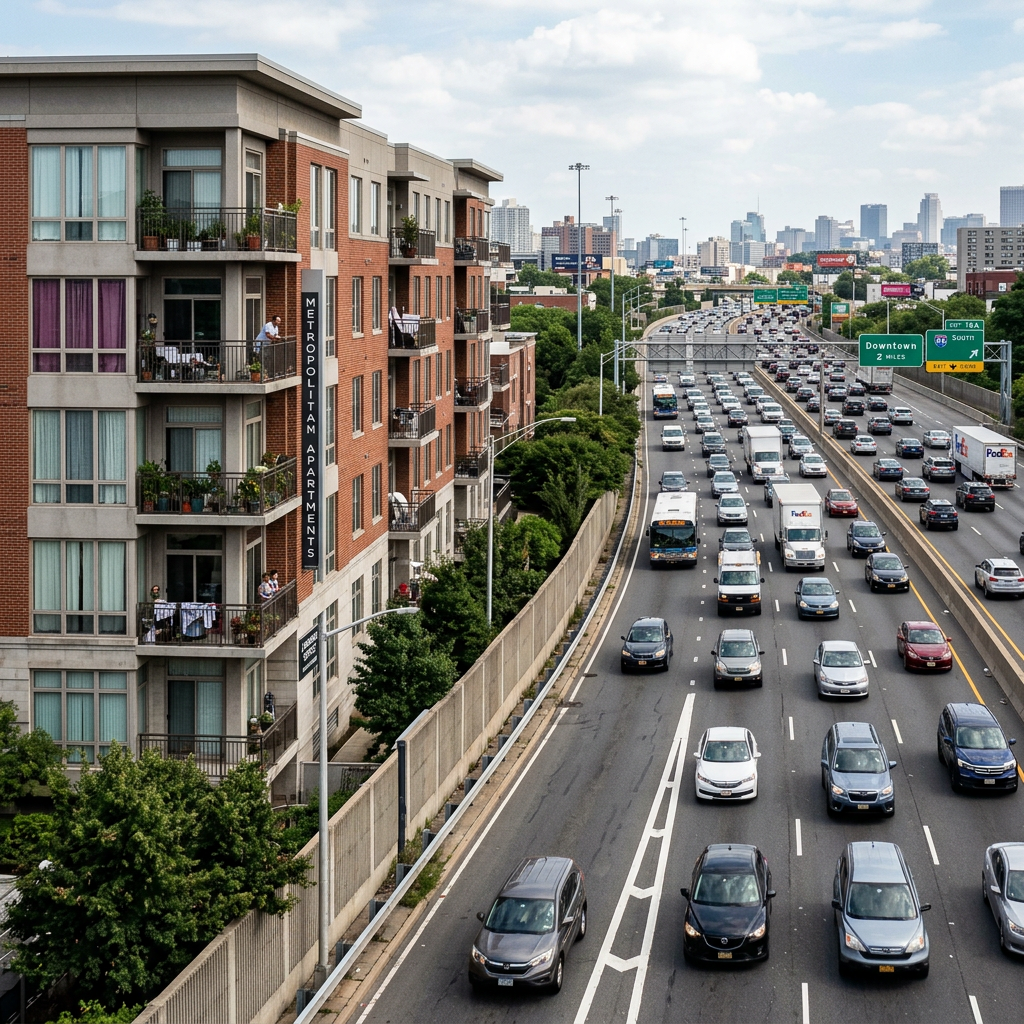
For many Australians, living in an apartment on a main road or near a highway is simply part of urban life. Proximity to transport, work, and amenities often comes at the cost of constant background noise, engines, sirens, braking, and the low hum of traffic that rarely stops. While this may seem like a minor inconvenience, psychological research is increasingly showing that the impact runs much deeper.
A growing body of evidence suggests that long-term exposure to road traffic noise is associated with measurable increases in anxiety, depression, and overall psychological distress. This isn’t just about annoyance, it’s about how the brain and body respond to a persistent environmental stressor.
What the Research Says
A large meta-analysis examining over one million participants found that increases in road traffic noise were associated with higher odds of both depression and anxiety. Even relatively small increases in noise exposure were linked to worsening mental health outcomes.
More recent longitudinal research has strengthened this link. A 2025 study tracking over 100,000 individuals found that people exposed to higher levels of residential traffic noise had a greater risk of developing depression and anxiety over time, even after accounting for factors like air pollution and socioeconomic differences.
Researchers believe the mechanism is rooted in chronic stress. Traffic noise acts as a constant low-level threat signal, activating the body’s stress response systems. Over time, this can lead to physiological and psychological strain. Studies show that noise exposure triggers neuroendocrine responses—the same systems involved in fight-or-flight reactions, which, when activated repeatedly, can contribute to mental health problems.
Sleep disruption is another key factor. Even when people believe they’ve “gotten used to” traffic noise, the brain continues to process it during sleep. Poor sleep quality has been shown to amplify the relationship between traffic noise and psychological distress, making individuals more vulnerable to anxiety and low mood.
In experimental settings, the effect is immediate. Studies comparing natural soundscapes to traffic noise found that the addition of vehicle noise significantly increased stress and anxiety levels, while reducing the calming effects of nature sounds.
Why Living on Main Roads Feels So Draining
The psychological toll of living near busy roads isn’t just about volume—it’s about unpredictability and lack of control. Sudden sirens, revving engines, or late-night traffic spikes keep the brain on alert. Unlike a single stressful event, this kind of exposure is continuous and unavoidable.
Over time, this can lead to:
- Heightened baseline anxiety
- Increased irritability and reduced emotional tolerance
- Difficulty concentrating or relaxing at home
- A persistent sense of mental fatigue
There’s also an important emotional dimension. Home is typically where people recover from stress. When the home environment itself becomes a source of stimulation and disruption, the mind has fewer opportunities to reset.
Psychological Strategies to Counter the Effects
While relocating isn’t always realistic, there are practical, research-informed ways to reduce the psychological impact of living near heavy traffic.
Reclaiming a Sense of Control
One of the most important psychological shifts is restoring a sense of agency. Even small actions, like adjusting your environment or routines, can counter feelings of helplessness. Using sound masking (such as white noise or calming audio) can help reduce the brain’s reactivity to sudden traffic sounds by creating a more consistent auditory environment.
Prioritising Sleep Protection
Because sleep disruption plays a major role in mental health decline, protecting sleep becomes essential. Establishing a consistent wind-down routine, reducing nighttime stimulation, and creating the quietest possible sleeping environment can significantly buffer against anxiety and mood changes.
Cognitive Reframing of Noise
The way noise is interpreted matters. Research suggests that “noise annoyance” is a key mediator between exposure and mental health outcomes.
If the brain labels traffic sounds as threatening or intrusive, stress responses intensify. Reframing noise as a neutral or background element, while not eliminating its impact, can reduce its emotional charge over time.
Building Daily Recovery Moments
If your home environment is stimulating, it becomes even more important to create pockets of psychological recovery elsewhere. Spending time in quieter environments, parks, green spaces, or even quieter rooms, can help regulate stress systems. Exposure to natural soundscapes has been shown to lower stress and improve mood, effectively counteracting noise-related strain.
Strengthening Emotional Resilience
Practices such as mindfulness and relaxation training can help reduce the body’s automatic stress response to environmental triggers. Instead of reacting immediately to every sound, the nervous system becomes less reactive over time.
Maintaining Social and Emotional Support
Living in a high-noise environment can subtly increase irritability and withdrawal. Maintaining strong social connections helps buffer against these effects, providing emotional grounding and perspective.
A Broader Perspective on Urban Living
The reality is that many Australian cities are becoming denser, and more people are living along major transport corridors. While infrastructure and housing design play a critical role in long-term solutions, understanding the psychological impact is equally important.
Living near a busy road doesn’t guarantee mental health problems, but it does increase vulnerability. The key difference lies in how individuals and environments manage that exposure.
Final Thought
Traffic noise is often dismissed as a minor inconvenience, but the research tells a different story. It is a chronic environmental stressor that can shape mental health in subtle yet significant ways.
The goal isn’t to eliminate every sound, an impossible task in urban life, but to reduce its psychological impact. With the right strategies, it’s possible to create moments of calm, regain a sense of control, and protect mental well-being, even in the middle of the noise.


Leave a Reply